It’s been awhile since I used this platform. Ten years ago In 2014 I took a leap and joined a group of Israeli women on a trip to India.
I wanted to share my emotions and impressions. I experience meditation and Yoga in a new environment. Since then I would mostly write about art and travel. Art is a subject that feeds my soul. Through travel I get to explore and discover new traditions, new customs and a lot more.
Today we celebrate the new year for the trees, Tu Bishvat. It’s a sign of renewal and growth. Today we also mark 111 since October 7th. 111 days that Israeli hostages are in the hands of terrorists. I wear a dogtag: Bring them home, we put blue ribbons on the trees to remind the world that we do not forget those taken hostage. Our soldiers are in Gaza fighting the terrorists, bombing armor stashed in tunnels.
Since October 7th when Israel was attacked by Chamas terrorists who did not discriminate between civilians to soldiers, between children and adults, between women and men, I have been itching to go.
It was the first time since moving to the US that I felt the need to be home. Although I have build a beautiful home with my husband Geoffrey and we raised three kids and have grandchildren, somehow the country I was born at- Israel will always be home.
I was anxious and worried about the fate of the country. I knew that I needed to go and do something . I felt that as an Israeli citizen I need to join my brothers and sisters in defending our land in any way possible.
I flew on November 7 and landed at 6:30 am. Driving to my mom’s apartment I was struck at the emptiness in the airport, only El Al plains were flying , on the way to get my passport stamped, rows of photos of the hostages lined the path. The traffic to Tel Aviv was light, the Israeli flags adorned every street corner and billboard. On Independence Day it is a custom to hang the flag but this time it was for solidarity. Everyone is united with one goal in mind. Together we will win.
On Hanukah there is a song, we came to erase the darkness , in our hands we have light and fire, everyone is a little light and together we are strong light.
The first place I went was the “Chamal (war room) Diskiot (Dogtag) “, volunteers ,mostly women sat in rows and packed dog tags that said, bring them home now. The money raised form selling them will go to the families of the hostages. Around 240 hostages were taken by Hamas, the number changes as sometimes a person who was considered hostage is found dead. Since the beginning of the war 87 Israelis were released. Hamas still has 137 hostages , among them 11 foreigners, 2 babies under 18, 114 between the ages of 19-74 and 10 above 75 . There are 20 women and 117 men in total.
In the evening I went to sit with the hostage families. The square in the from of the Tel Aviv museum is now called Hostages square. Different art installations were made to raise awareness and keep the hostages on the front page. A shabbat table was constructed with 243 seats , baby seats among them. Some of the hostage families sleep in tents.
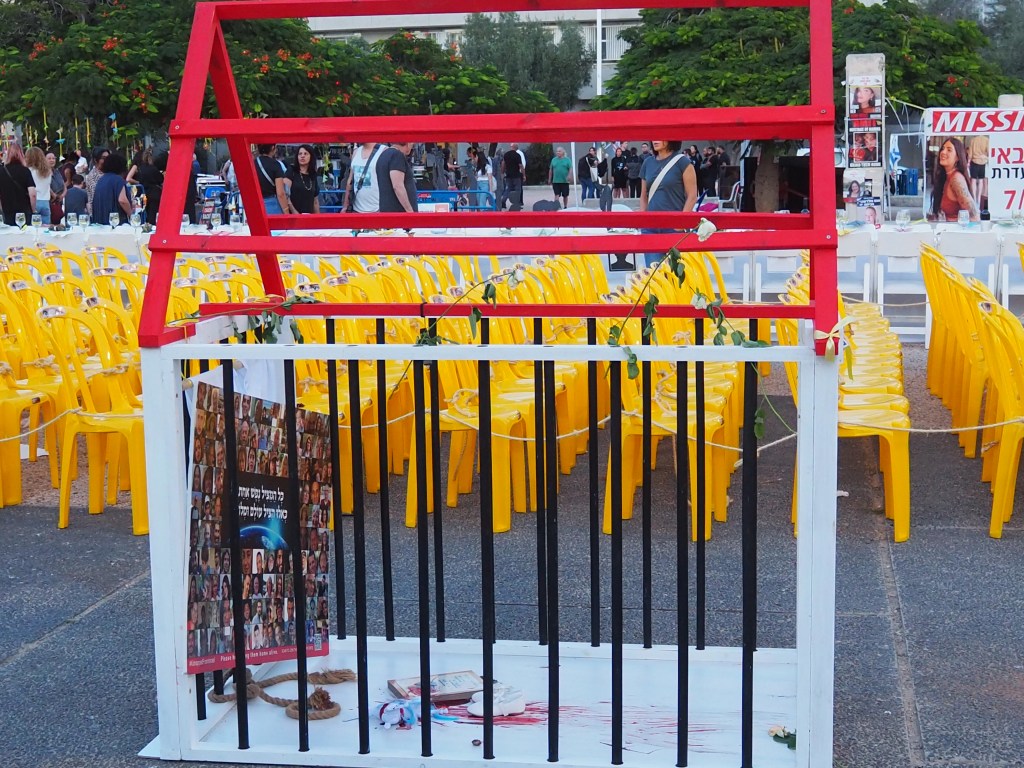

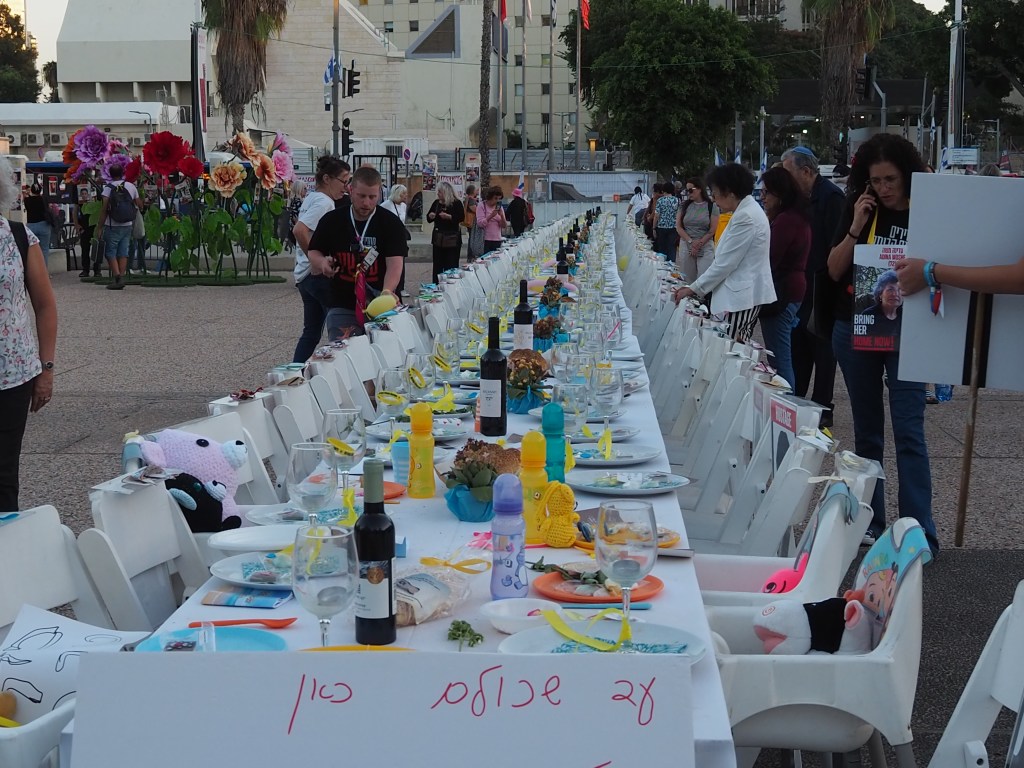
The square is facing the main army headquarters where the prime minister security council meet.
The next day I was picked up by Ofer who was one of the organizers of the demonstrations that took place almost at the same place as the hostage families seats. All the energy and desire to change is now working towards helping the 250,000 displaced families from the south who either lost their home or don’t have a safe room or safe place to run in case of missile attack.
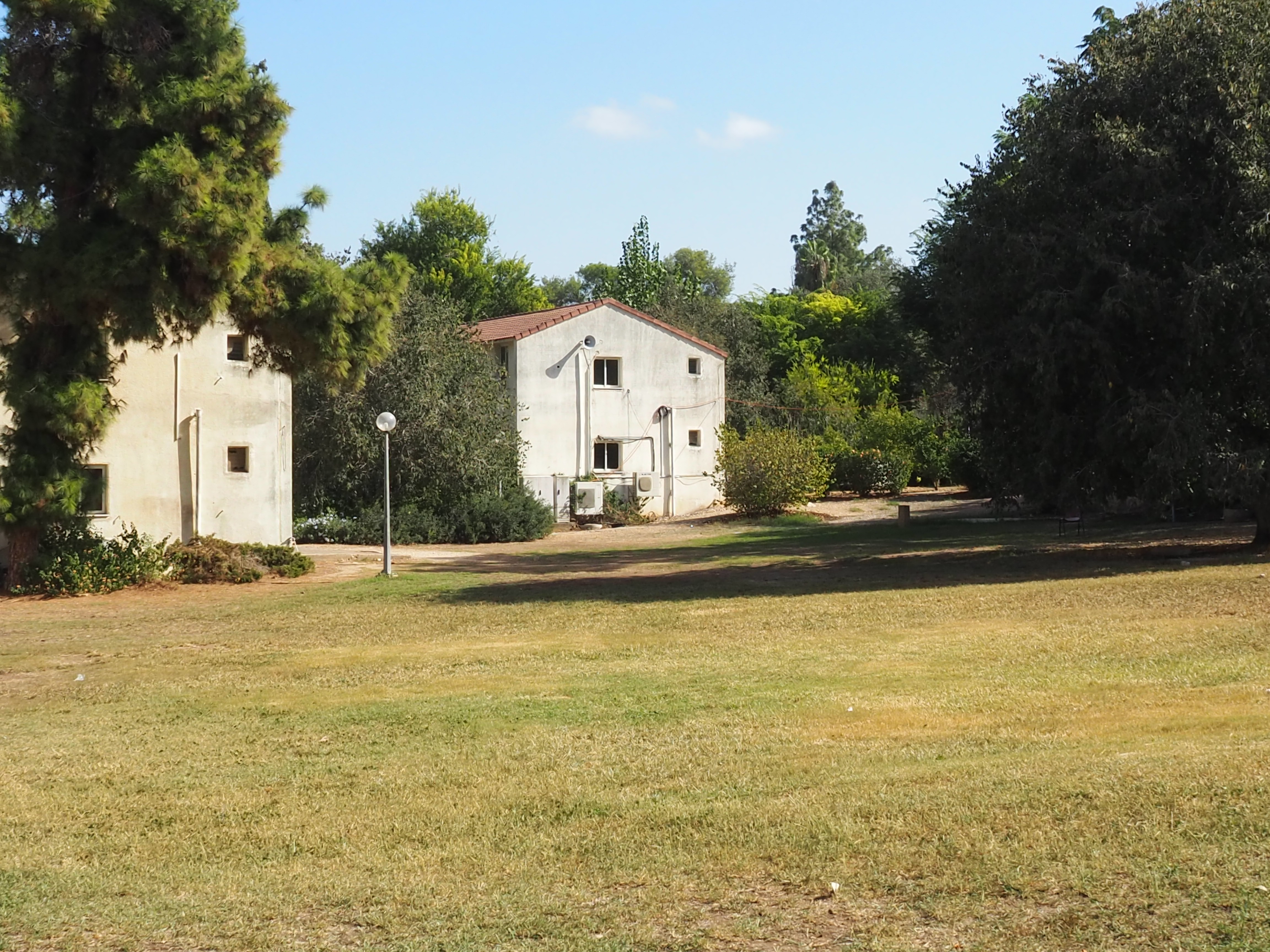
We drove to Givaat Haviva, it is a civil society organization that strive to create a model society I Israel, emphasizing the importance of a jewish and Arab shared society. They run education programs and house both Israeli and Arab children. Their program stopped and they house refugees form Ashkelon. They created kindergarten for the kids and signed the order kids to school nearby. These people left their home with nothing much. They put each family in a small room with bunk beds with no kitchen and no washing machine. They got donations of machines and cloths. A kindergarten was created for the kids so the parents can look a job nearby.

Next we drove to Binyamina to visit another Chamal, where volunteers are calling families who had to leave their homes, they did not want to go to a hotel so they try to find an alternative place for them, asking questions like do you have a dog? how many Children?
On the way to Tel Aviv I stopped at Chamal brothers in arm, at the beginning of the war they took over a hangar that used to be for exhibitions and filled it with cloths, diapers, toys, army supply, by the time i arrived, a month after the war started they also occupied a floor that a high tech company donated and there, they divided the rooms by needs, one room was to deal with the hostage families, so if someone wanted AirPods , someone was sent to buy and deliver it. Another room was for ordering army supplies to the emergency preparedness squad, in another room they worked with the tax authorities in the airport to release the equipment that arrives for the army .
It was Thursday evening, I heard of a woman who is cooking kosher food for the refugees in one of the hotels and also to Gaza for the soldiers.
I grabbed my friend Aya and we drove to the south of Tel Aviv to help her cook the meals. Someone was going to pick it up at 2 am to drive it to Gaza.
Friday morning I went to see an installation at another Tel Aviv institution Habima square where the philharmonic plays and the national theatre performs are closed , all the actors/ singers are traveling to the refugees and army bases to try to uplift everyone’s spirits. Restaurants are closed , No one has any desire to go out. This installations of empty beds has 241 beds.
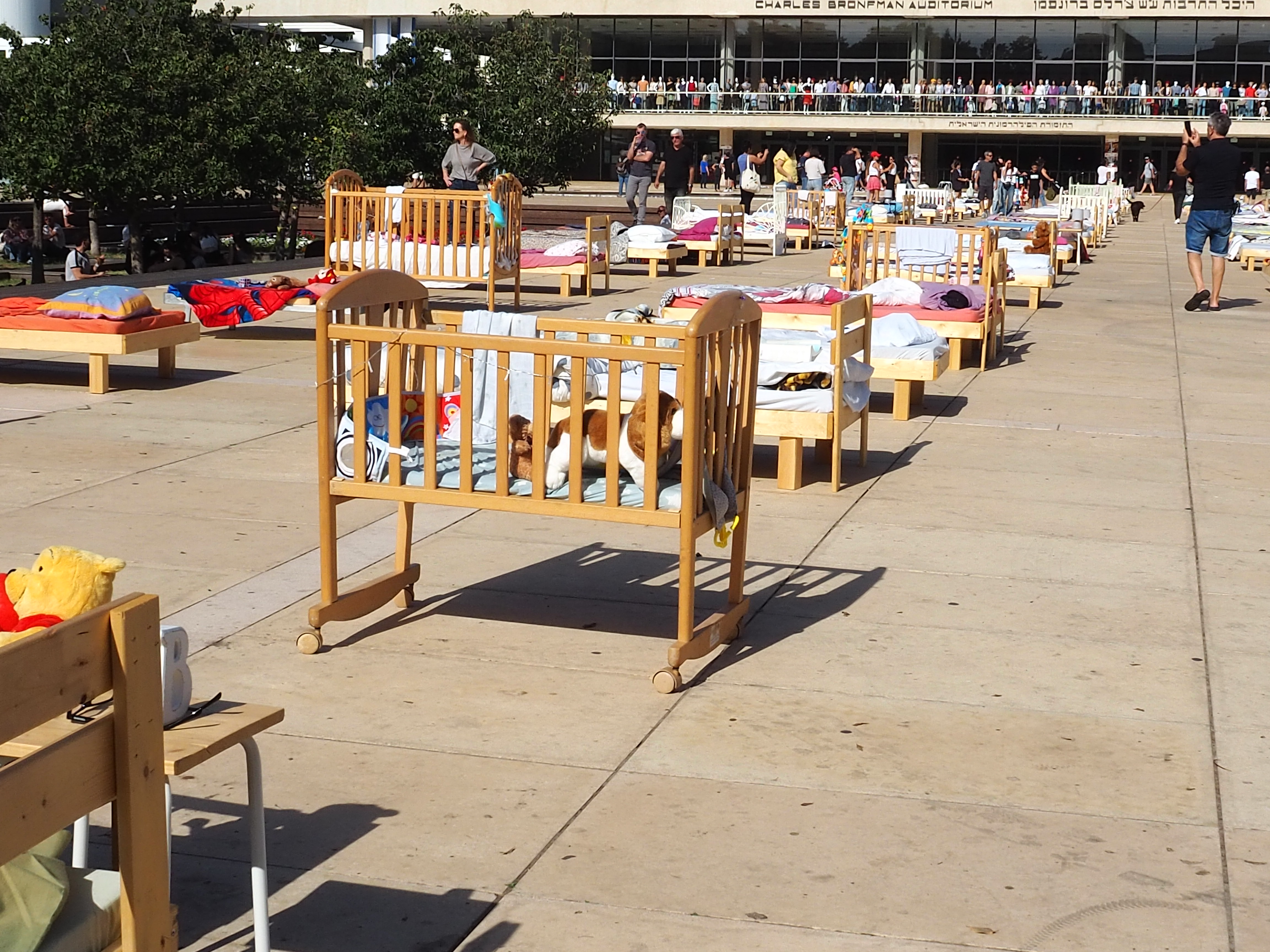
The “empty beds” art installation consists of 241 beds, equivalent to the number of kidnapped men, women, children, and infants being held in captivity by hamas-isis in gaza. The beds portray the unbelievable size, dimension and vastness of our disaster. And the magnitude of our call to action that is – To bring every last one home now!
The creator and visionary behind the installation is the artist and sculptor Eran Webber, who partnered with strategist Vered Huri. Together, they launched the installation for the families of kibbutz nir oz and all the families of the abducted men and women. The installation amplifies the cries of the abducted and their families and is intended to keep the issue on the global agenda. It’s called, empty beds, a bed is home, its the place where my day and your day ends but also starts. But now we don’t have day and no night.The artist Eran Weber create it with Vered Churi.
I continued to the hostage square to take part in Kabbalah Shabbat where the chief army cantor performed and some hostage families talked .In the middle there was a siren and we all walked into the shelter and stayed there for 10 minutes. Near by we heard a boom and later found out that a piece of a rocket fell on a car, the person inside got hurt as she did not get out fast enough.
Life goes on, Kabalat Shabat continued.
On Sunday I drove to Jerusalem to visit the Chamal yerushalmi. First stop was at the culture center which in regular day has the Nisan Nativ theatre school but now they converted the space to a makeshift clothing store. The evacuees would come and take whatever they need. Shoes, sweaters etc . We have to remember that they left their house empty handed with one set of cloths.

In the performance hall the hanger with different items are housed families sen da list of what they need.
The Chamal head quarters are housed in the Bezalel school architecture building.
In the evening I joined a group of JDC board members who flew for 48 hours to see the work on the ground.
The first evening we heard form two hostage families, Romy Leshem Gonen ’s mother Merav told us that her Arabic gardener helped locate romy’s cell phone and sadly they realized that she was kidnappped, she is still in Gaza. During Hanukah I read in the Israeli papers that her grandma is pleading with Galant to bring her back. How can she survive in captivity for so long (64 days). They live in Kefar Veradim which is in the north, Romy was kidnapped form the festival.Next we heard from Rachel Baruch whose husband Ariel was kidnapped form the festival as well. He called her at 6:30am and said he will come home early because of rockets , he was in Miflasim 2 km from sderot. When she called him later , a person answered the phone in Arabic and said allla akbar. She understood that he was taken.She has a five year old at home who is asking where is dad?Her brother in law said it is like living in the dark.
They believe that all will be back.
We heard form Ofrat Berman from the hostage forum.They have a support system of volunteers who provide phycological help and anything they need.
The company: Checkpoint gave a building to the hostage forum and they give economic support as well. The HMO’s have a file on each hostage with their medical information so they can be prepared when they will be released and can access each person’s condition before and after.
Next we heard form Miri Eisen who is a retired colonel of the Israel defense forces with background in military intelligence. She said that the chamas charter equals the prisoners of Zion. The number of hostages is unprecedented and there is nothing to compare. There are hundred of people in dozens locations. There are more then one terror group who is holding them. . We have not seen this kind of atrocities. Her analysis is alarming. We have. Long road to destroy Hamas and Israel has to do it in a systematic way.War is a terrible thing.
JDC focus on mid term and long term intervention. They work in partnership with the municipalities, goverment ministries and UJA .They coordinate with the hotels to which the evacuees were send and create different programs.
On Monday morning we drove to the Dead Sea.
Each community is housed in a different hotel. There are 2500 kids age 0-18.
We first visited a spa that was converted into a center for disabled kids age 4-8. In place of the products we see children books and toys.
We then met Tomer who created a school where a solarium for glamping was there . The school was build in three days with support from the education ministry. The principal is form Kibbutz Beeri. It’s a place where the kids can be to get support by talking to each other and getting hugs. It is build across the road from the hotel where they were evacuated to . At the beginning they were reluctant to leave the hotel but slowly they came.


The next hotel were people form Sederot. Some of then are in the hotel and some are in other places like Netanyahu and Tel Aviv. They created a center where anyone can get help regarding their rights.
The next hotel was the David hotel where Kibuutz Beeri evacuees stay. The kibbutz had 1000 house holds , 30% were killed or abducted and their homes were ruined. They cannot go back to the kibbutz as it is war zone. Some were aloud to check on their home and needed an army escort to get in.
JDC build a kindergarten in place of the dining hall. Each kid got a back pack with his /her name.
We met with Izik Who manages the psychological department for the area that was hit. He is from kibbutz in Zurim, this kibbutz was evacuated to Eilat. On October 7 he went for a walk, his knee heart so he went back to the kibbutz and at the entrance he heard the red alert. He lay down behind the garage for fifteen minutes and then called his wife who was in a different home and she told him to go into the main office of the head of Eshkol region. While he was in the safe room he heard what was happening in the municipality. He lost hundred of patients and friends. His son told him that they kidnapped a neighbor. His family was saved because they live in a smart home and saw the terrorists on the camera. The terrorist got scared and ran away. His family was saved but no one came to help for a long time. The first people who came to help were the Joint. They went to all the hotels and gave immediate professional help.They try to teach the parents how to deal with their kids. One of the tools they use is the HUBUKI doll, it is a way for the family to connect and help their kids express their pain. The kids hug the doll and pretend that they take care of the doll. When they are in a safe environment they can relax.The parents learn how to communicate to their child through the doll.
The JDC also mobilized the youth movements in helping to organize the younger kids.
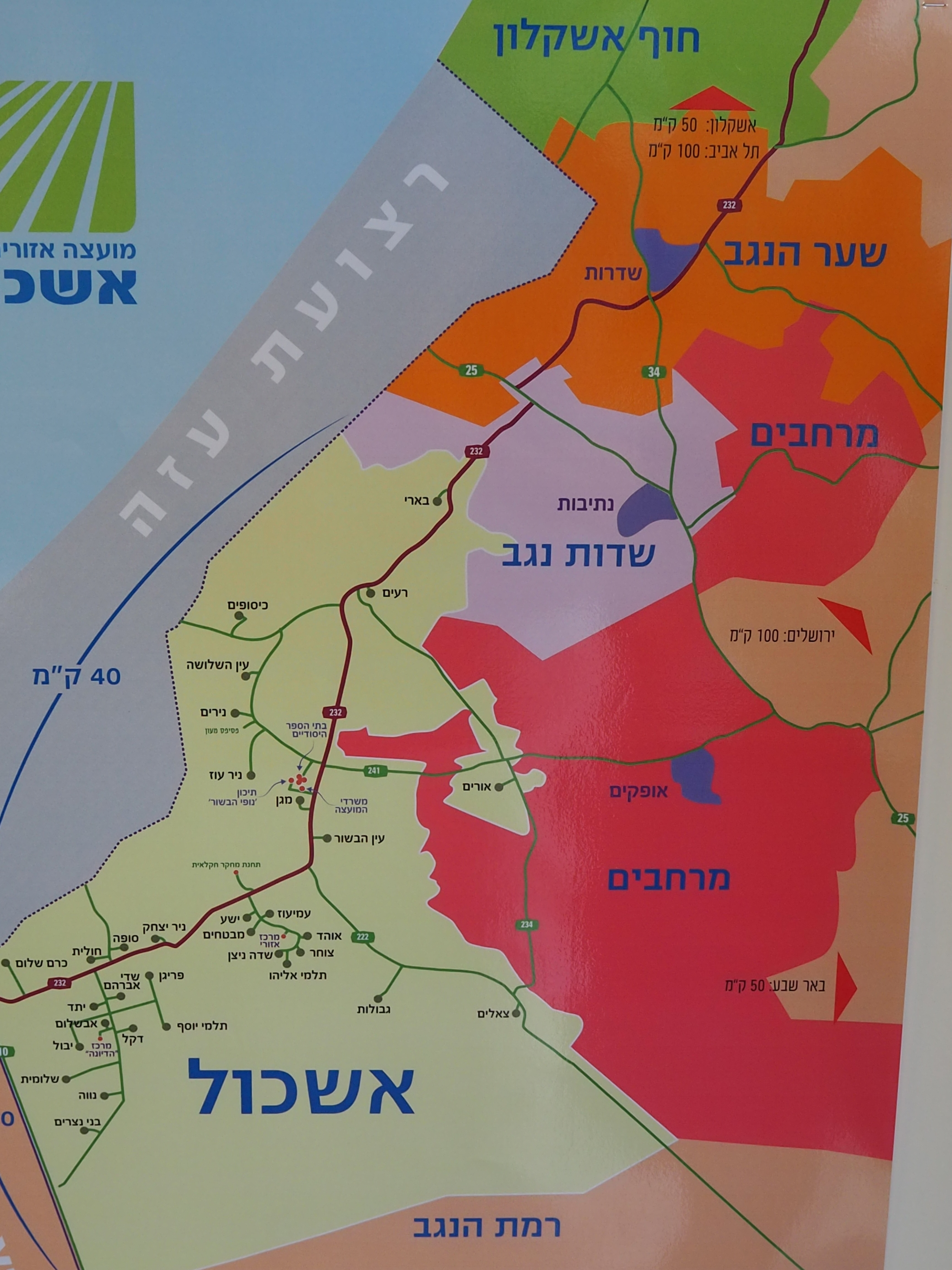
On Tuesday morning we went down to Kibutz Brosh where there is an elderly day center which was reopened . People form near by kibutz kedar and Kibutz Asher which are 17 KM from the border come and have few hours of activities.

Eshel also works with the caregivers. Some caregivers were kidnapped and some left the country. Eshel developed webinars for to help with care for the elderly.
We had lunch with soldiers form the artillery division. They shoot missles into Gaza.
We then drove to Ofakim. The terrorist drove on the Main Street and shot at anyone who was walking on the road to synagogue. The police was trying to fight , many policemen died. In front of a house where someone died there is a memorial candle.
We met a woman whose daughter in law came to visit her with her 6 kids , one of them an infant of 6 months.
She climbed to the second floor and help the kids go on the roof through a window and they were saved .

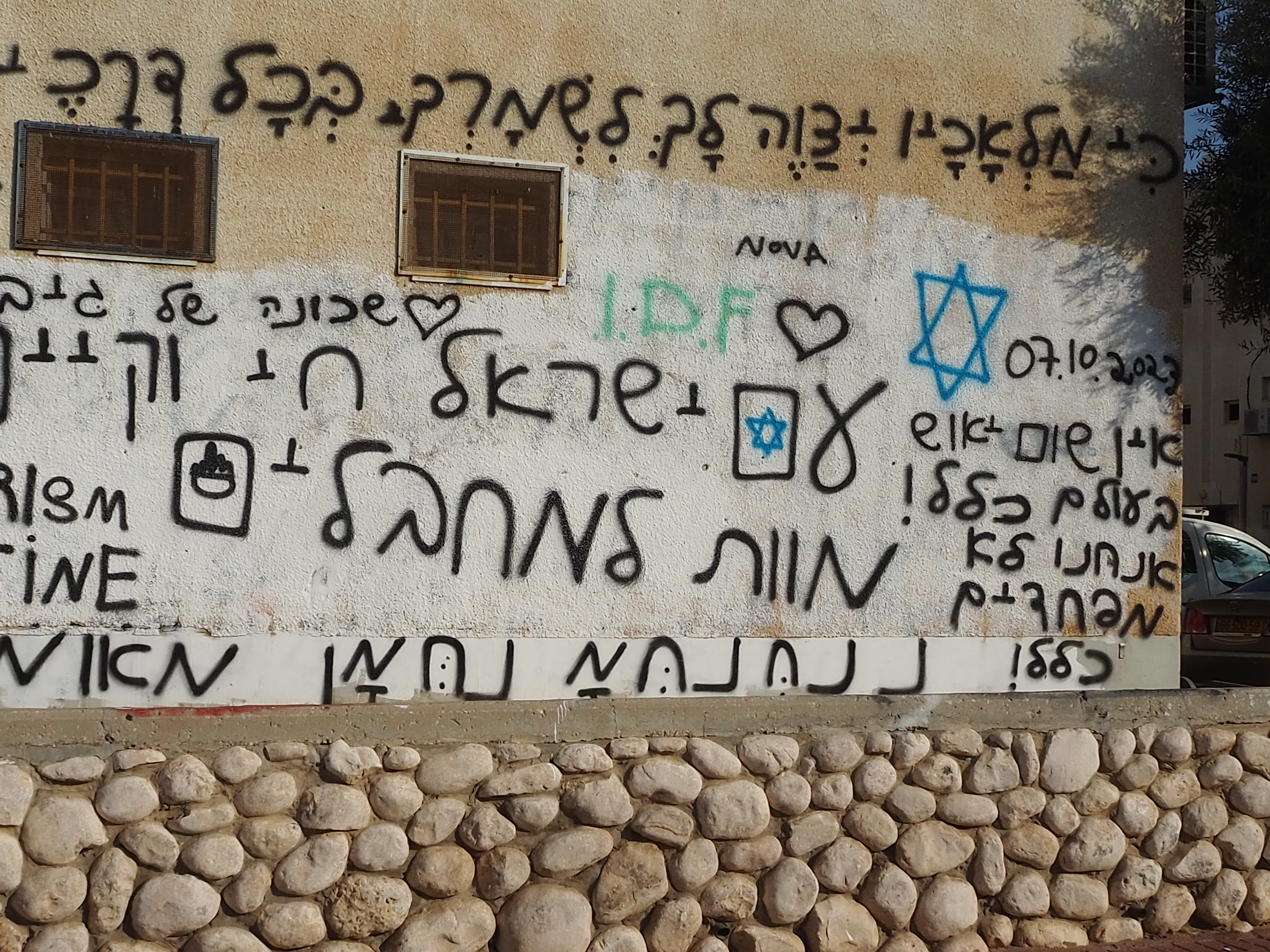
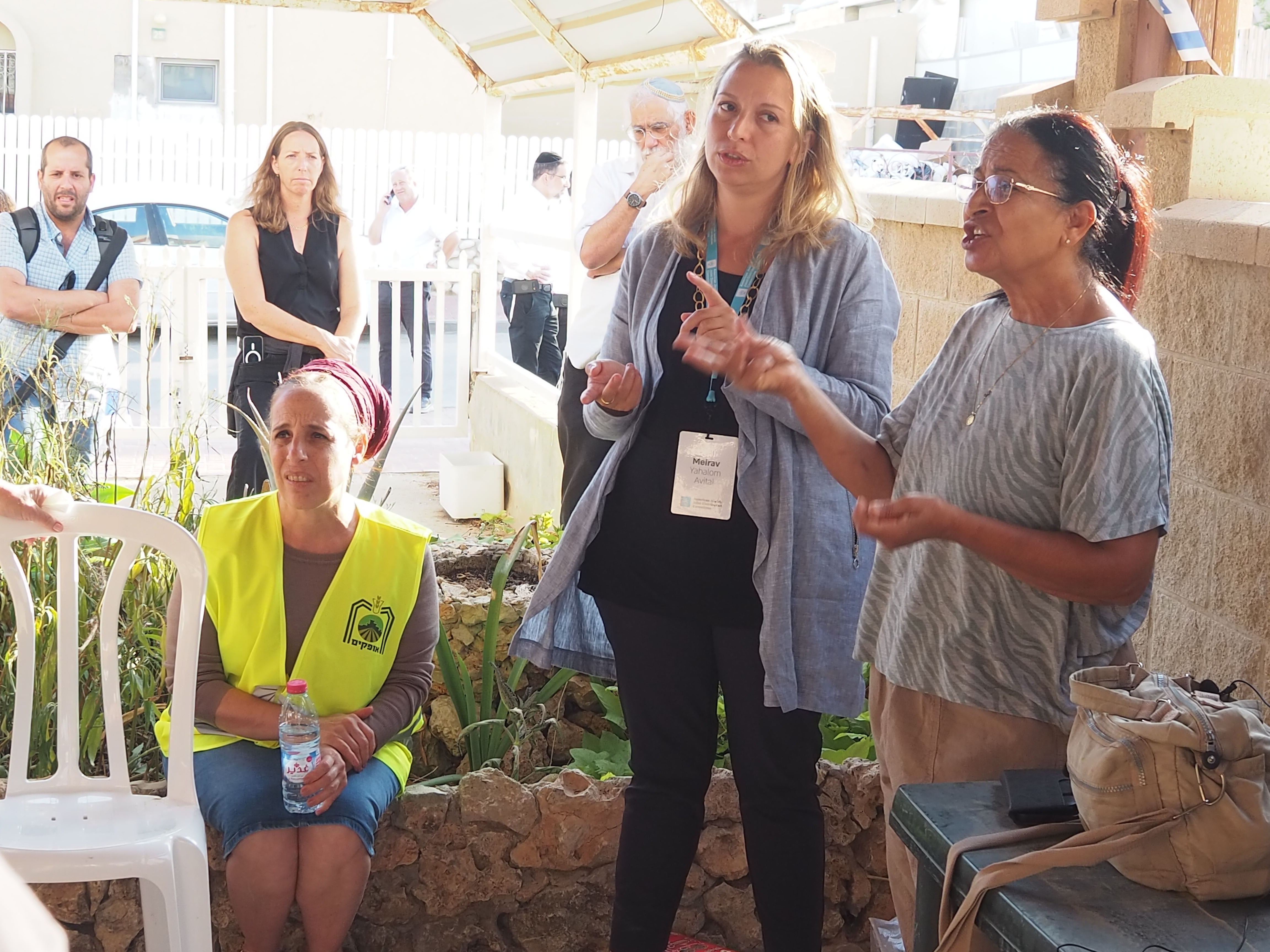
The terrorists through a grenade into the house which made it inhabited but did not get to the kids.
We then visited a new center that was created for rthe community where they can spend time talking about their situation. An artist created a wall where the citizens can express their fear and horror.
Many companies and individuals volunteer to pick vegetables and fruits as the Palestinian workers are not aloud to enter and Thai workers , some left the country. Soon it will be time to plant for the next season.
I talked to an Israeli friend yesterday, although it has been months since I was there are still have hostages in Gaza, missiles are shot into the country in the South and the North. Some restaurants opened but overall the joyous life that we are used to see in Tel Aviv and other cities is not there.




 THE-ORNA